Libromedia Viewer (legacy)
Redesigning how teachers find their books.
- ROLE
- Lead Designer
- YEAR
- [Year]
- TEAM
- [Team]
- PLATFORM
- [Platform]
Overview
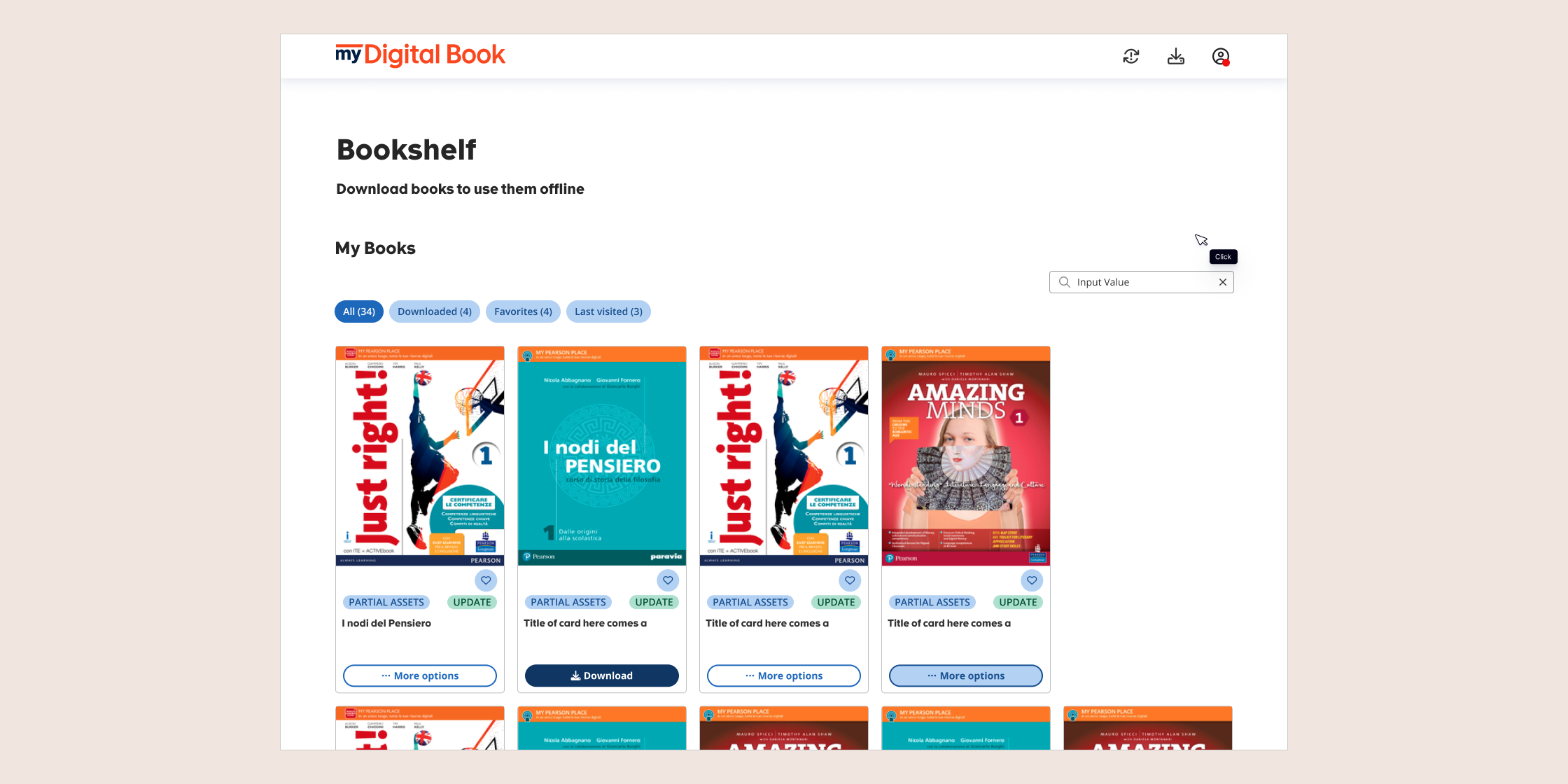
Bookmanager is where teachers on Libromedia find, organise and open their digital textbooks. I led the redesign as the platform grew from one market to several. That growth turned a tidy library into a maze, as it tried to serve every market’s needs.
The problem
One structure, many ways of teaching. Libromedia’s information architecture was built in 2021 for Polish schools. There, teachers typically teach one subject across several age groups. When the platform expanded to Italy and Spain, it met a different reality: teachers covering several subjects for one group of students.
The same flat structure now had to serve both. It struggled in three places:
- Different teaching models. A single-subject Polish teacher and a multi-subject Spanish teacher look for books in fundamentally different ways.
- Volume. Teachers managing 40 to 100+ books were scrolling, not finding.
- Categories that didn’t travel. Labels that matched Polish teachers’ mental models made little sense elsewhere.
The real challenge wasn’t navigation. It was designing one architecture flexible enough to bend to each market without breaking into several products.
What I did
As lead designer for this feature, I owned the new information architecture and search experience. The project started as a business requirement rather than a research finding. Market expansion had made the problem visible, and the brief was to improve findability before it slowed adoption in Italy and Spain.
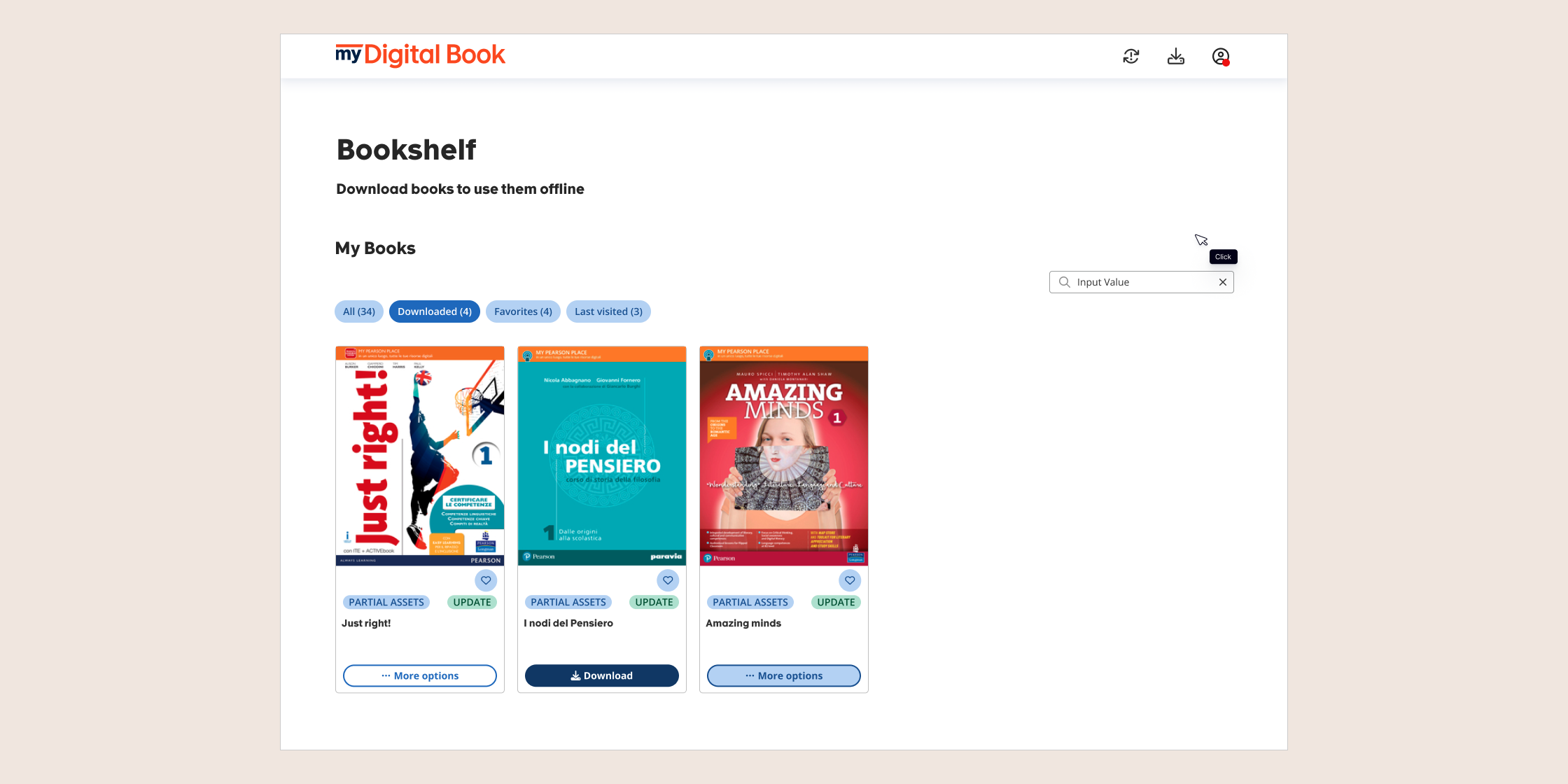
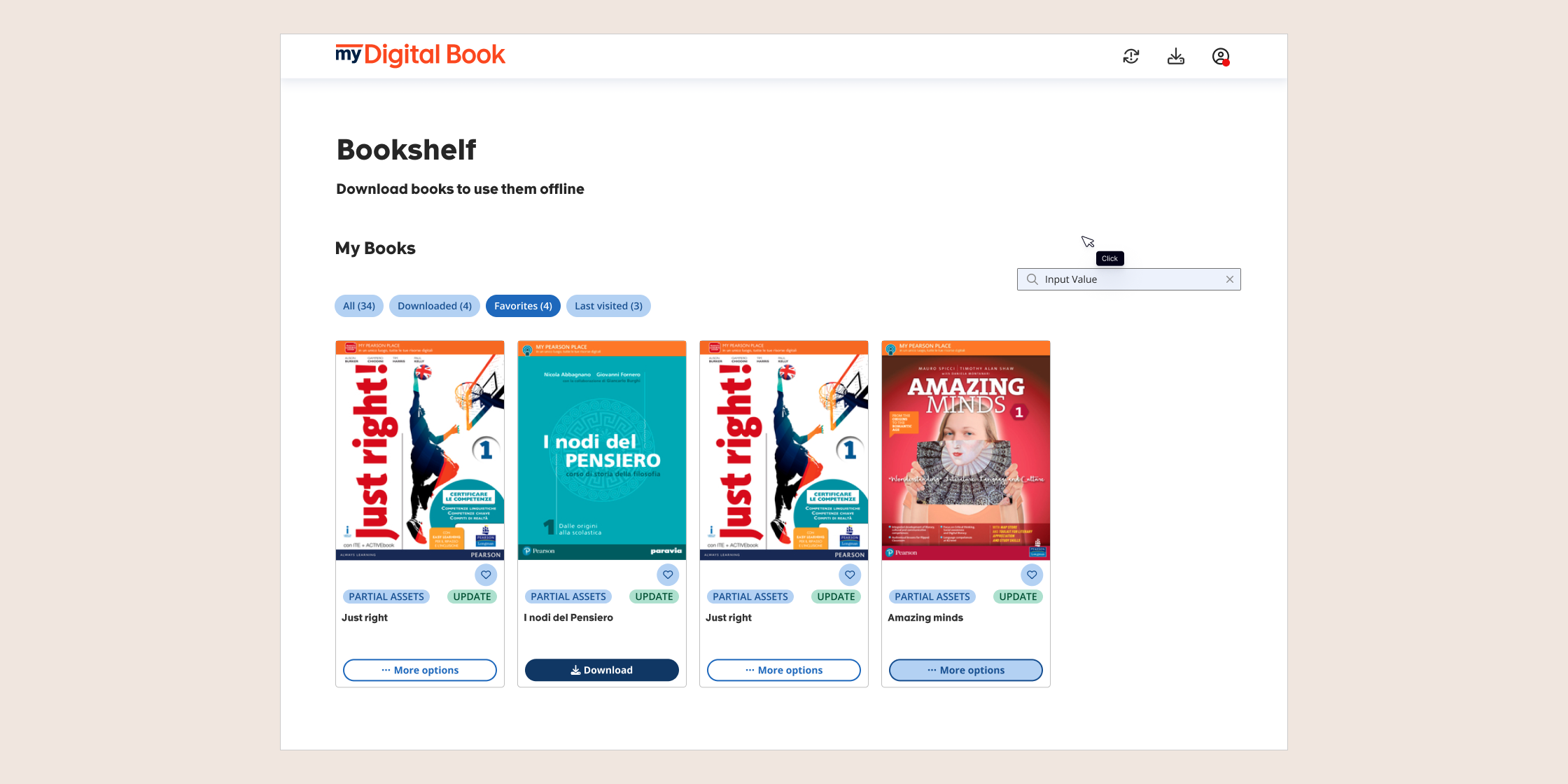
Without upfront research, I worked from what we already knew: how teaching differs across markets, how the existing structure was being used, and what sales teams were hearing from schools. I designed a deterministic system, with a clear structure, quick filters and fast search, because teachers need to trust that the same query always finds the same book.
Designing for how teachers teach
The key here was to follow teachers’ mental models: how they look for a topic in a book, and in real life.
Outcome
- +40% content discovery
- Time-to-content halved
It proved to be a scalable model for new markets.
What I would do now, with AI
- Search by intent, not by category (solves the mismatched categories). Teachers could type “fractions practice for my 4th graders” and get the right chapters across books, whatever the market’s labels. The taxonomy stops being the bottleneck.
- AI-assisted tagging against each curriculum (solves market adaptability). AI maps every book to each country’s curriculum objectives, with editorial teams reviewing the output. One content base can then present itself differently per market without manual re-cataloguing for each launch.
- Library views that adapt to teaching models (solves the Polish vs. Spanish split). The library could reorganise by subject or by class depending on how a teacher actually works. Teachers choose the view, but the system suggests it.
- From finding books to preparing lessons. The bigger shift is that teachers don’t want a book. They want what they need for Tuesday’s lesson. This is where Bookmanager could connect to an assistant like Sanna: find, adapt and prepare in one flow.
- Faster research. AI-supported synthesis of interviews across markets and languages, and quick prototypes I can test with teachers in days rather than weeks.