Sanna
Designing AI teachers can trust.
- ROLE
- AI Experience Designer
- YEAR
- 2025–2026
- TEAM
- Andi Kaperski, Grzegorz, Blazej, Bartosz, Michal, Maja
- PLATFORM
- Desktop (at launch)
The problem
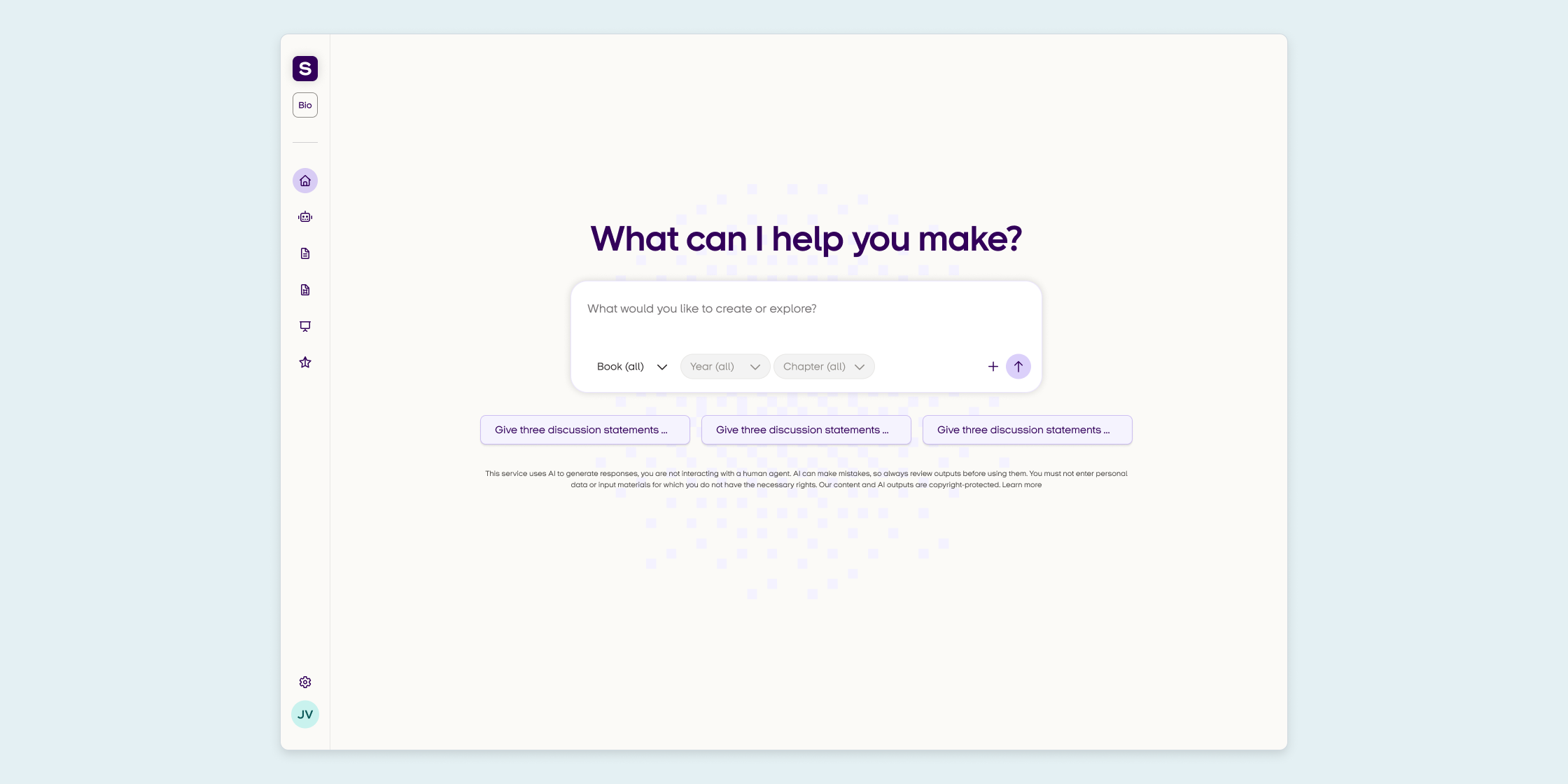
Teachers spend a big part of their week on work that isn’t teaching: planning lessons, adapting materials, grading stacks of handwritten work and writing individual feedback. Generic AI tools promise to help, but teachers can’t trust where the answers come from, and a wrong suggestion in a classroom has real consequences.
The problem wasn’t whether AI could save teachers time. It could. The problem was whether teachers would trust it enough to use it, and whether we could design it so they stayed in control.
What I did
I joined Sanna in its earliest days, when it was still more of a question than a product. Over a year, I delivered several feature MVPs and led the design from discovery through to launch, working closely with engineering, product and research, and with the teachers who would eventually use it.
My work covered the full experience:
- Discovery and concept: shaping which teacher tasks Sanna should take on first, and which it shouldn’t.
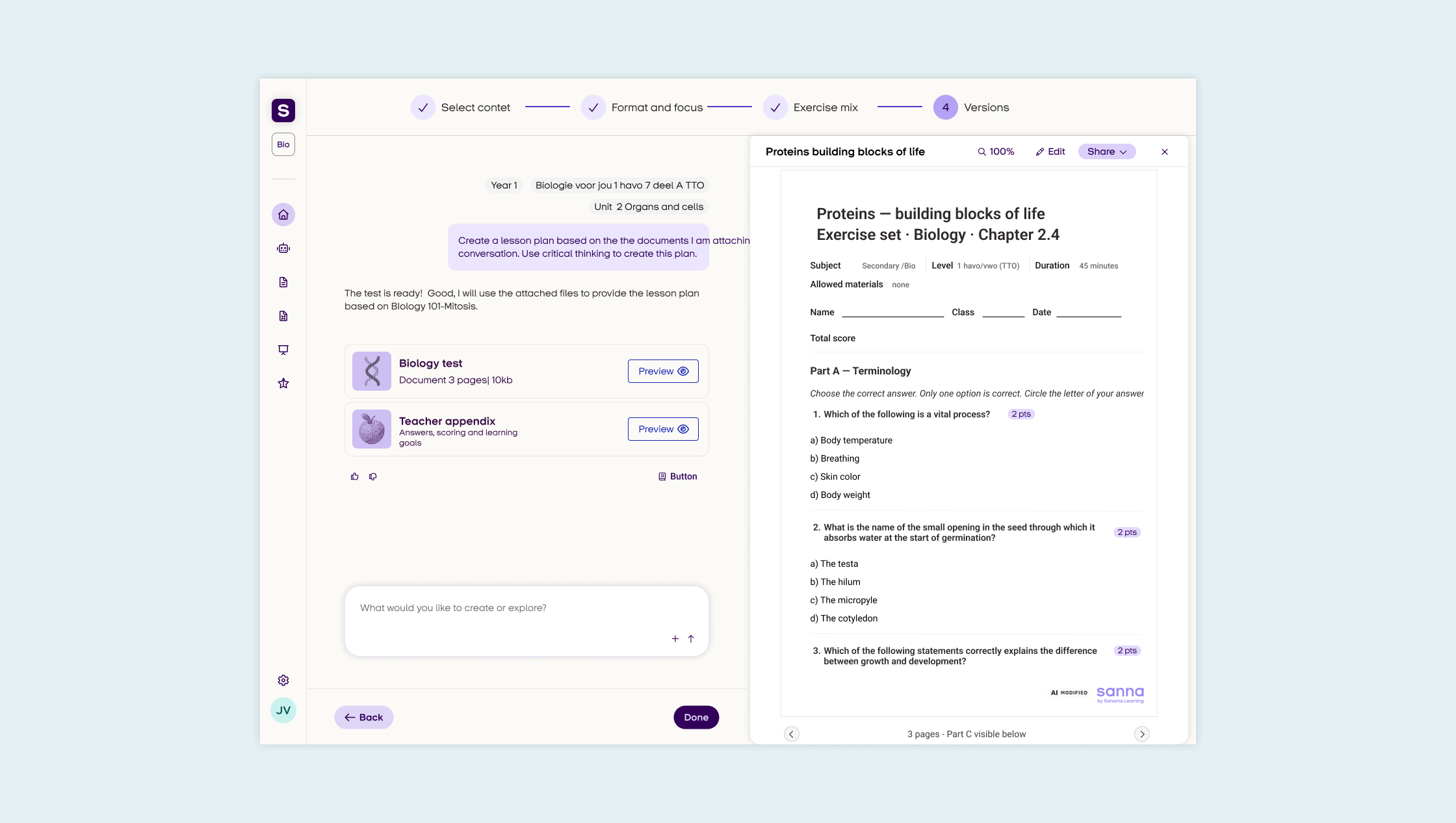
- The Grading & Feedback wizard: an end-to-end flow from scanning handwritten work to verifying what the AI read, building rubrics, reviewing feedback student by student and sharing a printable feedback letter.
- Onboarding and sign-in for a product launching across several countries, each with its own login systems and consent requirements.
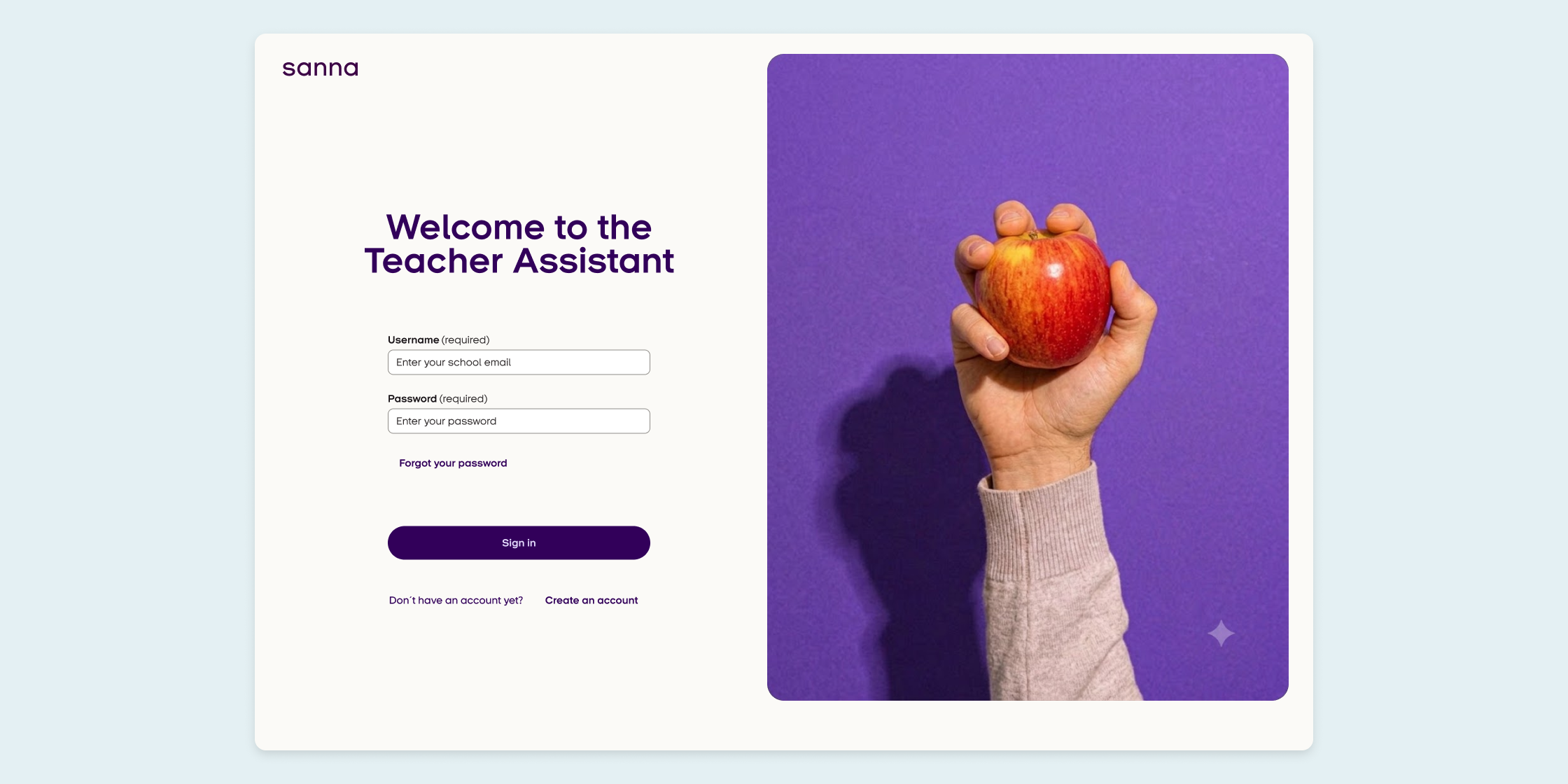
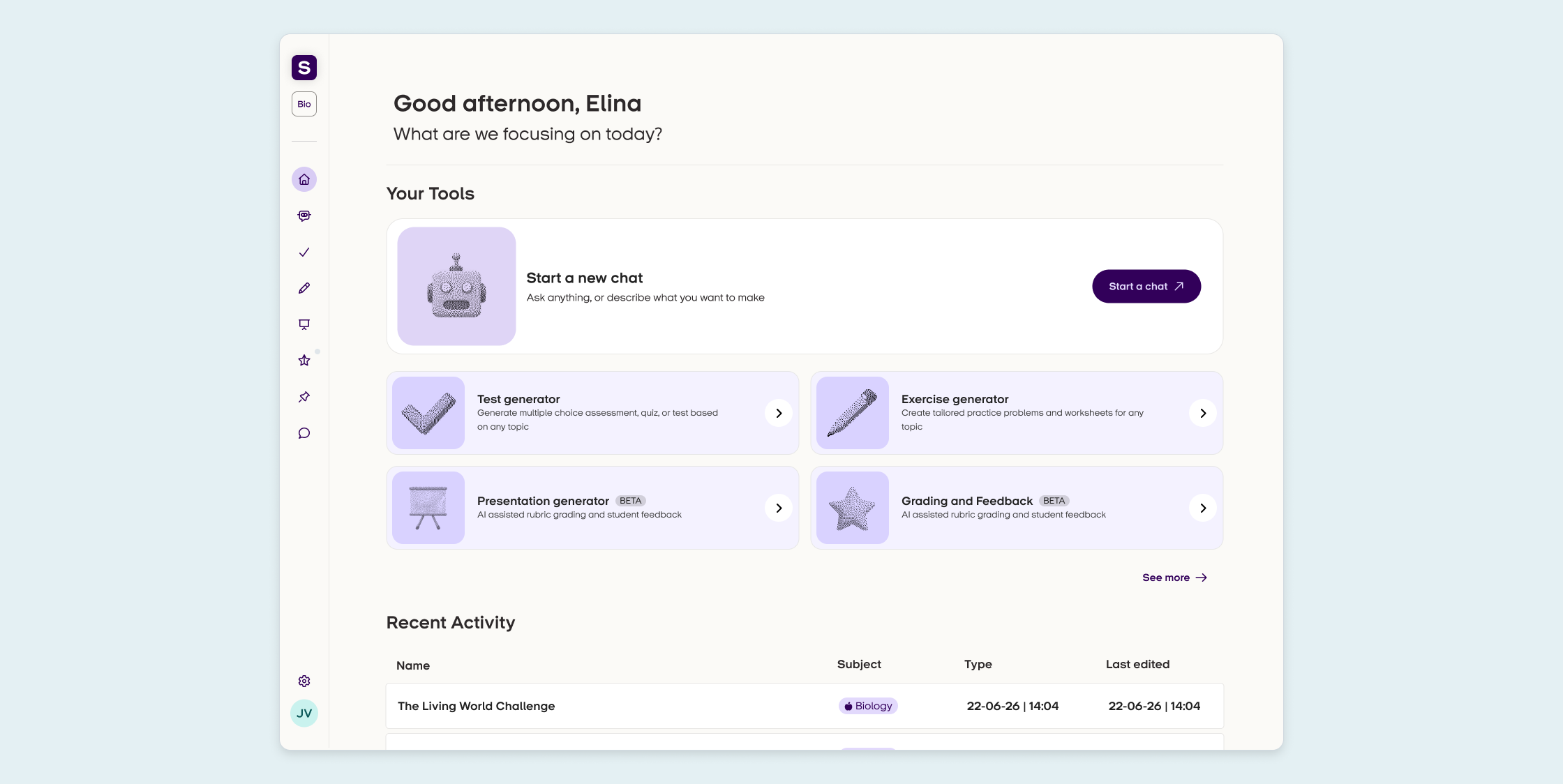
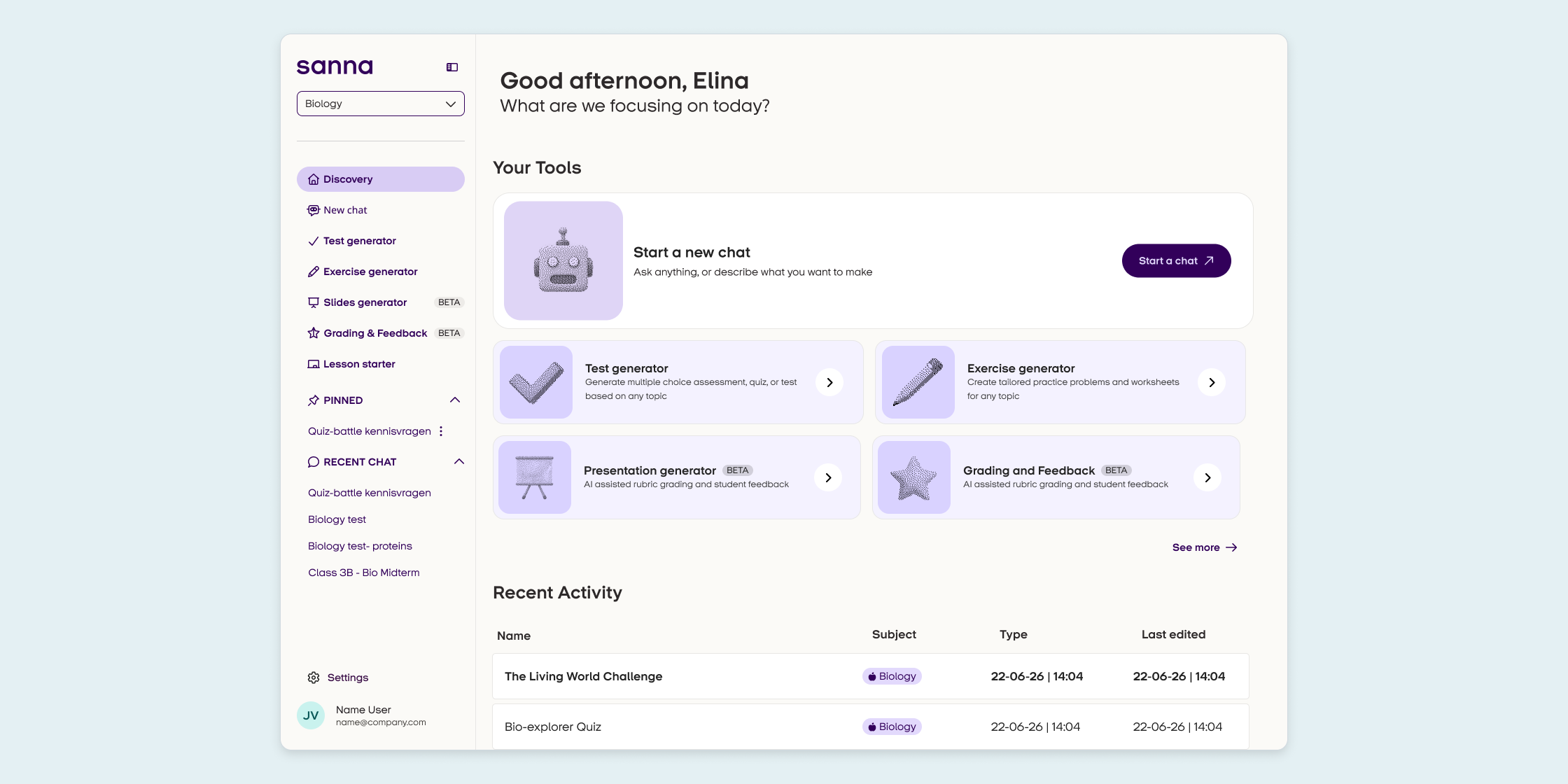
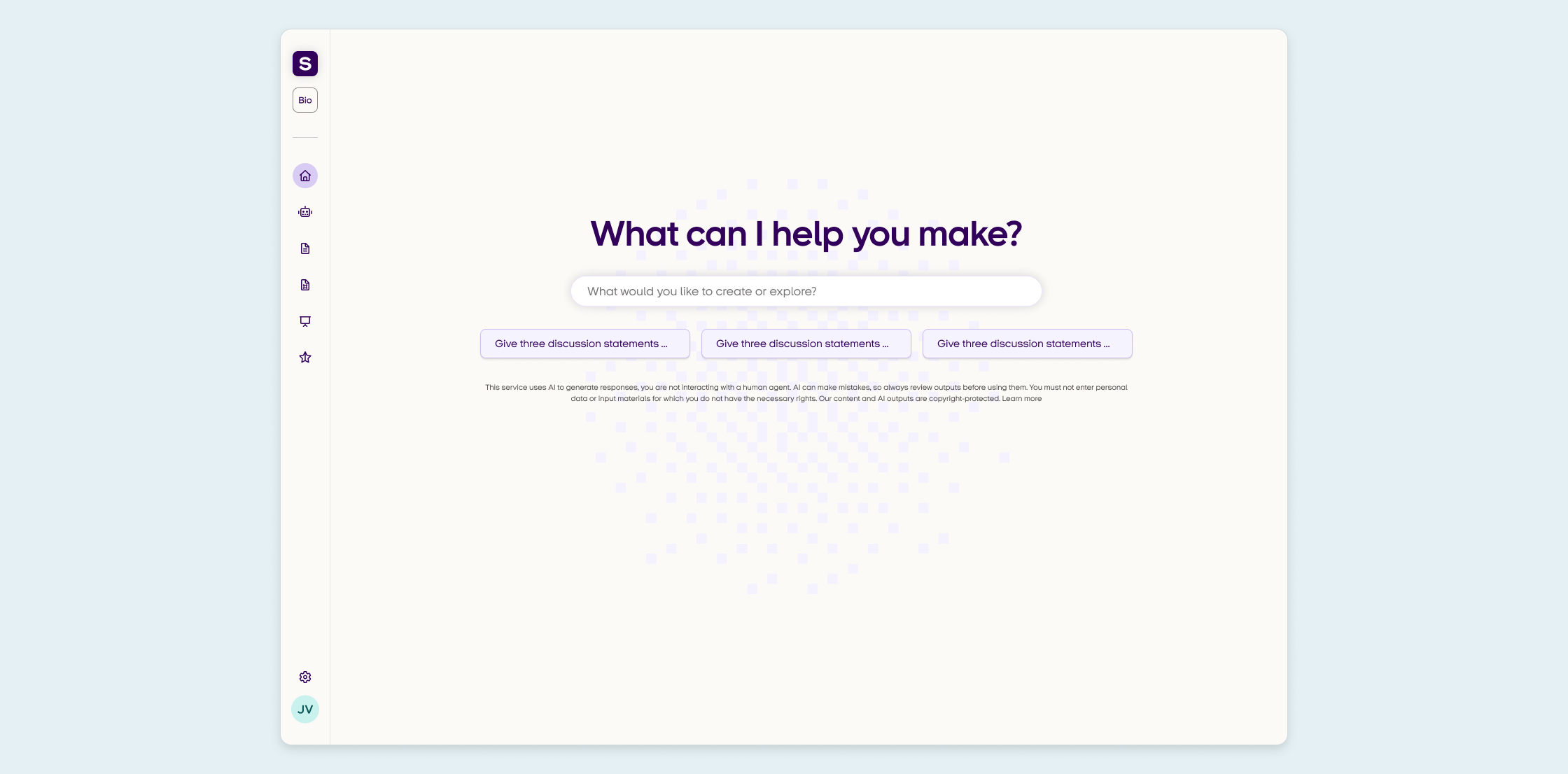
- The app shell, designed to adapt from desktop down to mobile.
- Sanna’s voice: a warm, professional companion to teachers, carried through every message, error and empty state.
- Accessibility: documenting standards and reviewing the build against them, because a tool for every teacher has to work for every teacher.
- Rebranding: I worked closely with e-Types, a Danish design and strategy agency, who led the marketing campaign and the rebrand from Teacher Assistant to Sanna.
Somewhere along the way, my role grew beyond screens. I found myself designing how the AI should behave, what it should admit it doesn’t know, and where it should step back and let the teacher lead.
Designing for trust
Trust was one of the principles Sanoma firmly believed would make this product stronger and help it stand out in the market. For Sanoma, trust wasn’t a feature we added at the end. It was a design decision on every screen.
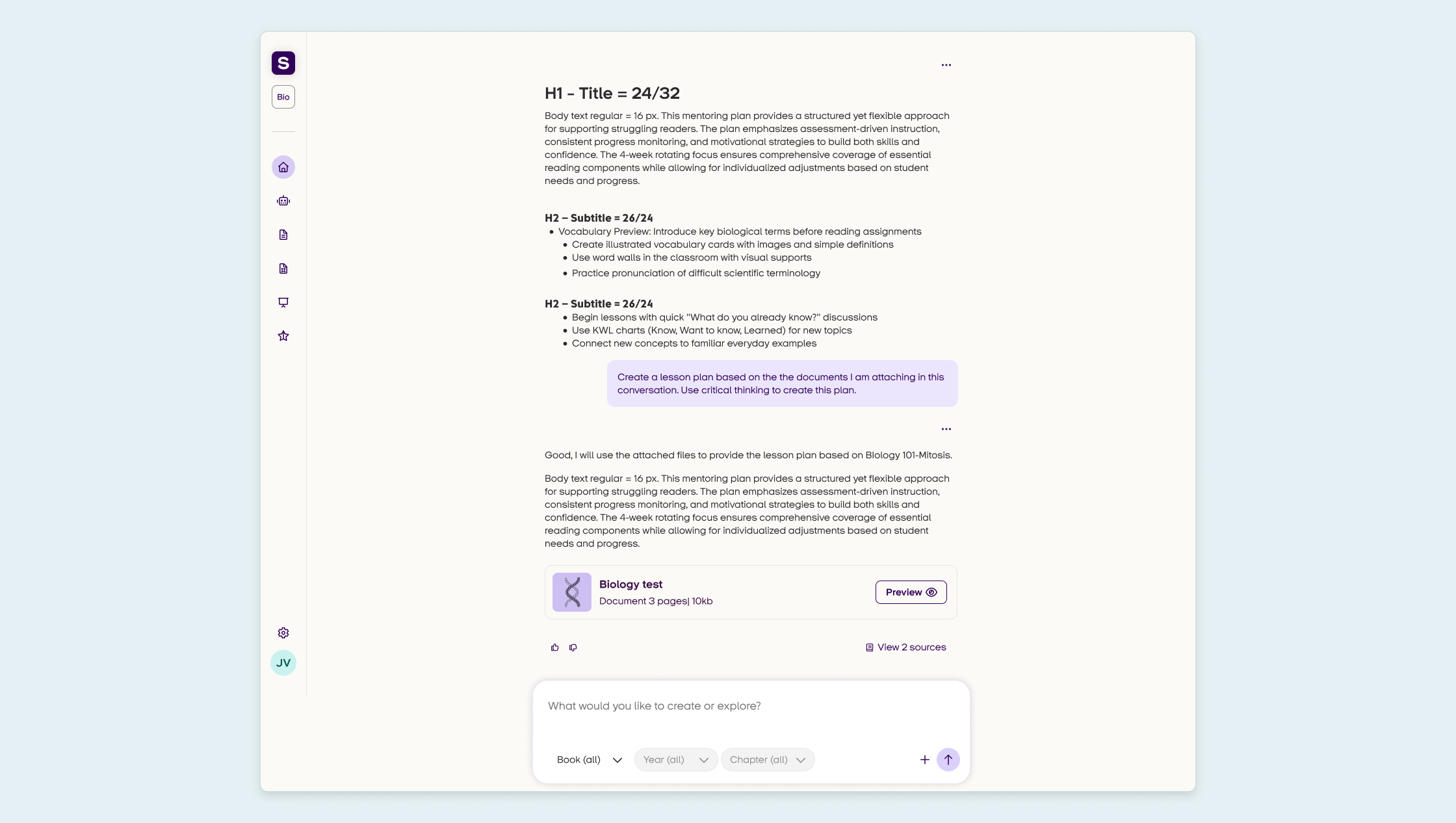
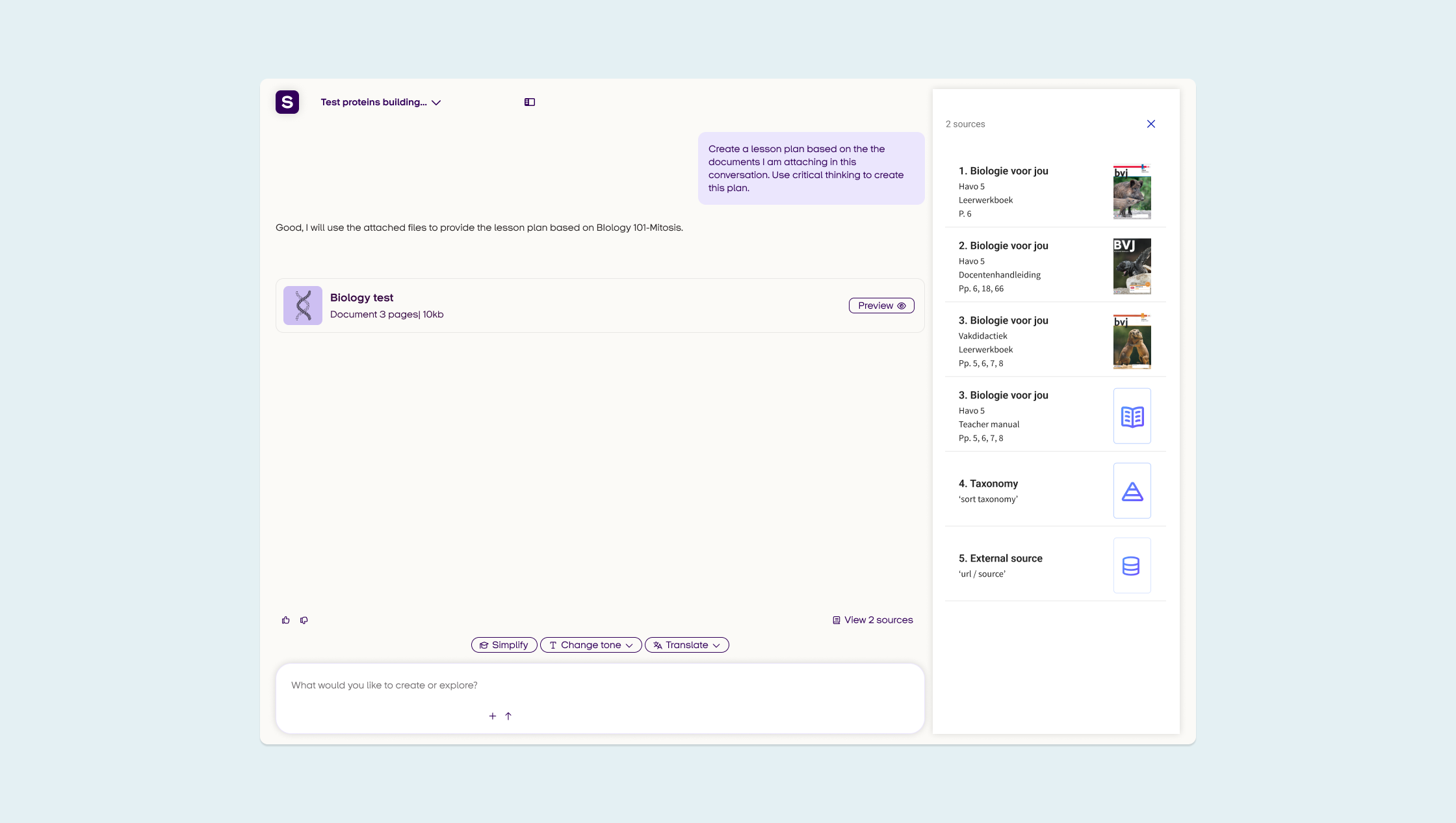
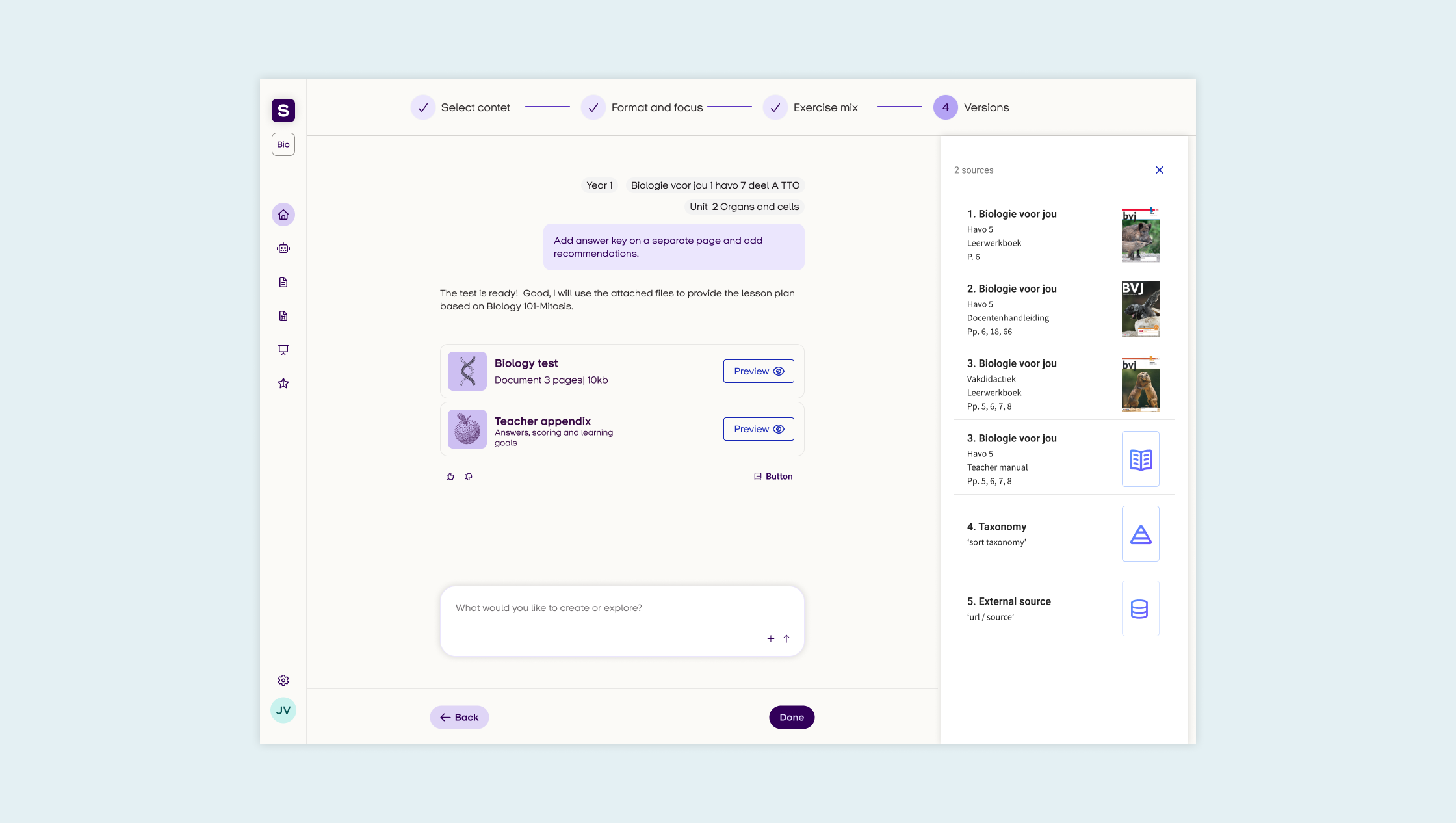
- Show where answers come from. Generated content displays its sources and curriculum references, so teachers can see it’s built on Sanoma’s methods.
- Explain the reasoning, not just the result. In grading, Sanna shows per-criterion reasoning, so a teacher can see why a grade was suggested, not just the number.
- Be honest about uncertainty. Uncertainty flags show where the AI (or the third-party OCR reading handwriting) is less confident, pointing the teacher to what needs a second look.
- The teacher has the final say. Every AI output is a suggestion, and the copy says so plainly: the teacher makes the final decision.
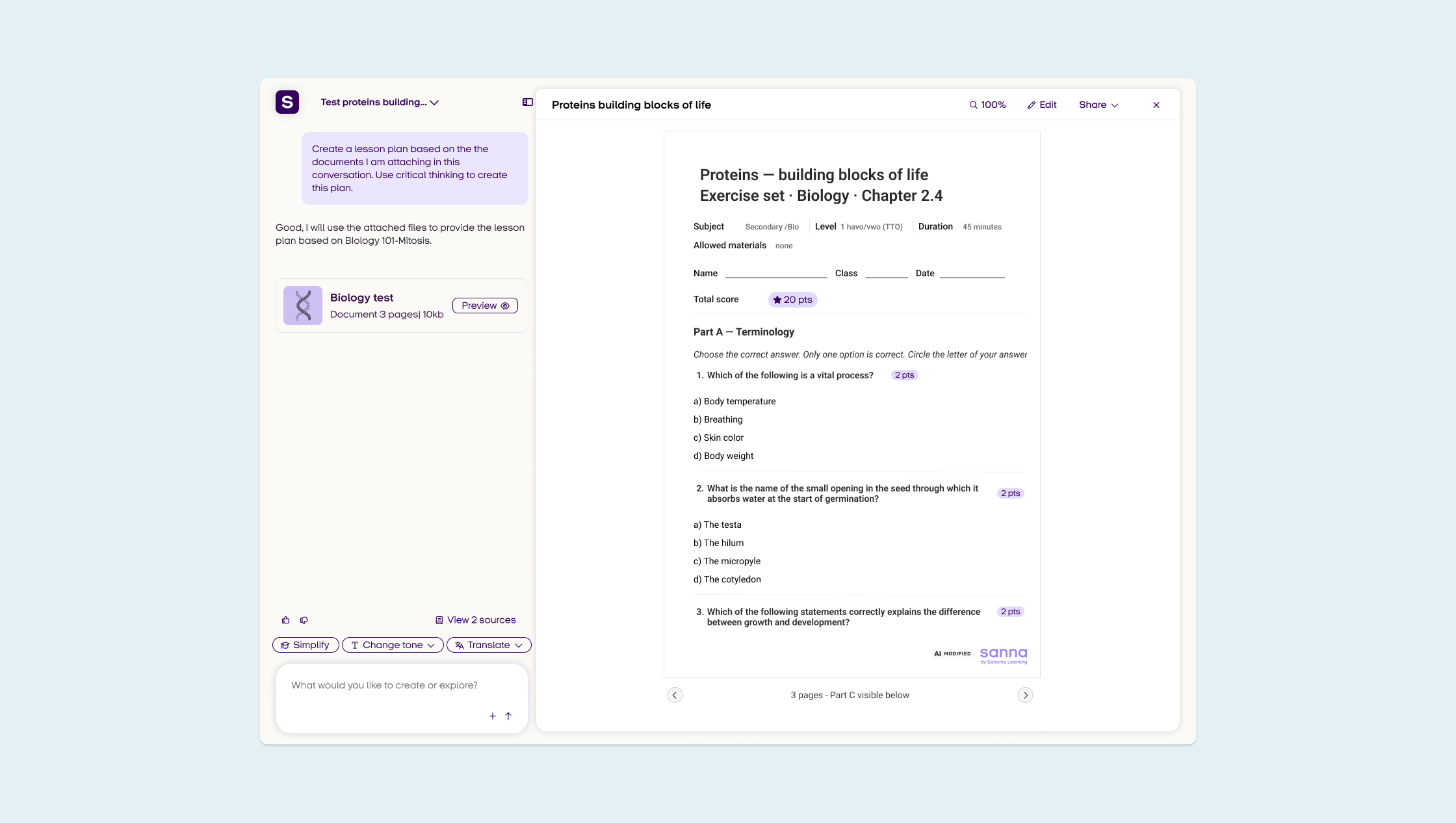
- Label AI clearly. AI-generated content is labelled, and a transparency notice in onboarding means nobody is surprised.
We couldn’t control the accuracy of the handwriting recognition, as it relied on third-party OCR technology, so I designed a verification step around it. That’s a good example of designing for a model’s limits instead of hiding them.
Outcome
Sanna launched within a year at sanna.eu, across 7 markets in Europe and 14 languages.
[What we’re measuring.]
[One or two real teacher quotes from research.]
What I’d take with me
Building Sanna taught me that designing AI products is less about the model and more about everything around it. Two lessons in particular will shape how I work from now on.
- Accessibility needs an owner from day one. It’s easy to treat accessibility as a checklist for the end of a project, something to fix once the product is built. But by then, it’s no longer a design decision; it’s a list of repairs. A product meant for every teacher has to be designed for every teacher from the first sketch. Next time, I’d make sure accessibility has a clear owner and a place in every review, not just in the final audit.
- As engineering gets faster, design ownership matters more, not less. AI-assisted coding is changing how products are built. Engineers can now generate working interfaces in hours, and that’s exciting. But speed creates a new risk: the experience can start being shaped by whatever gets built first, rather than by what users actually need. I learned that the role of design isn’t to slow this down, but to give it direction. Clear principles, shared patterns and early involvement mean the whole team can move fast and in the same direction.